
Las Vegas is known for more than its rich nightlife and place as a world-renowned tourist destination.
It’s also known for having hard water. When compared to other U.S. cities, Las Vegas has the second-highest hard water rating in the country.
Hard water can cause issues with water pressure, leave behind chalky residue, and stains. It also causes problems with appliances.
Soft water, however, has low mineral levels. The superior quality of soft water reduces the amount of buildup and impact on appliances. If you’re struggling with the impact of the city’s hard water, installing a soft water system can transform your water supply and save you money over time.
Let’s take a closer look at what causes hard water, why Las Vegas has hard water, the benefits of soft water, and how soft water systems work.
Learn more about our water-saving reverse osmosis system today.
What Is Hard Water?
The water hardness scale determines the degree of hardness (or softness) of water supplies. On this scale, a rating of 180 milligrams per liter or more is classified as hard water. When referring to water, milligrams per liter is equivalent to parts per million.
The water in Las Vegas has a rating of 291 parts per million (ppm). According to the water hardness scale, this is high, but what does it actually mean?
The hard water measurement refers to the volume of minerals in the water. Although calcium and magnesium are the minerals most commonly associated with hard water, other minerals that can cause hard water include the following:
- Aluminum
- Barium
- Iron
- Manganese
- Strontium
- Zinc
Why Does Las Vegas Have Hard Water?
The Colorado River is Las Vegas’s primary water source. Since the Colorado River travels through areas with an abundance of minerals, the water picks up these minerals on its way into Nevada. The Colorado River then delivers water to Lake Mead, which is also located on mineral-rich soil. Lastly, water stored in Lake Mead is transferred to local water treatment plants, where it is treated and then distributed to the city.
How To Know if Your Home or Business Has Hard Water
Hard water has a visible impact on buildings and the human body. The minerals can cause the following issues:
- Chalk-like residue on dishes
- Difficulty getting detergents to lather
- Dry skin
- Dull hair
- Faded laundry
- Low water pressure
- Scaly deposits inside kettles
- Scaly deposits on faucets and showerheads
- Soap scum in tubs and sinks
- Spots on dishes
- Stiff laundry
Residue from the minerals in hard water builds up inside pipes, causing low water pressure. Eventually, the buildup will cause blockages that can be costly to repair.
The adverse effects on your plumbing system also impact your building’s water quality, resulting in an unpleasant taste to your water. The water will also leave stains on dishes, sinks, and tubs.
How Soft Water Systems Work
Since hard water has widespread effects, you may be wondering about soft water systems and how they work.
First, it’s essential to understand what distinguishes soft water systems from other water softening methods. You can soften water by adding vinegar or baking soda. You can also boil, distill, or filter water to make it soft. However, these water softening methods do not protect your plumbing system. For the most part, they are localized, treating small amounts of water at a time, making them time-consuming.
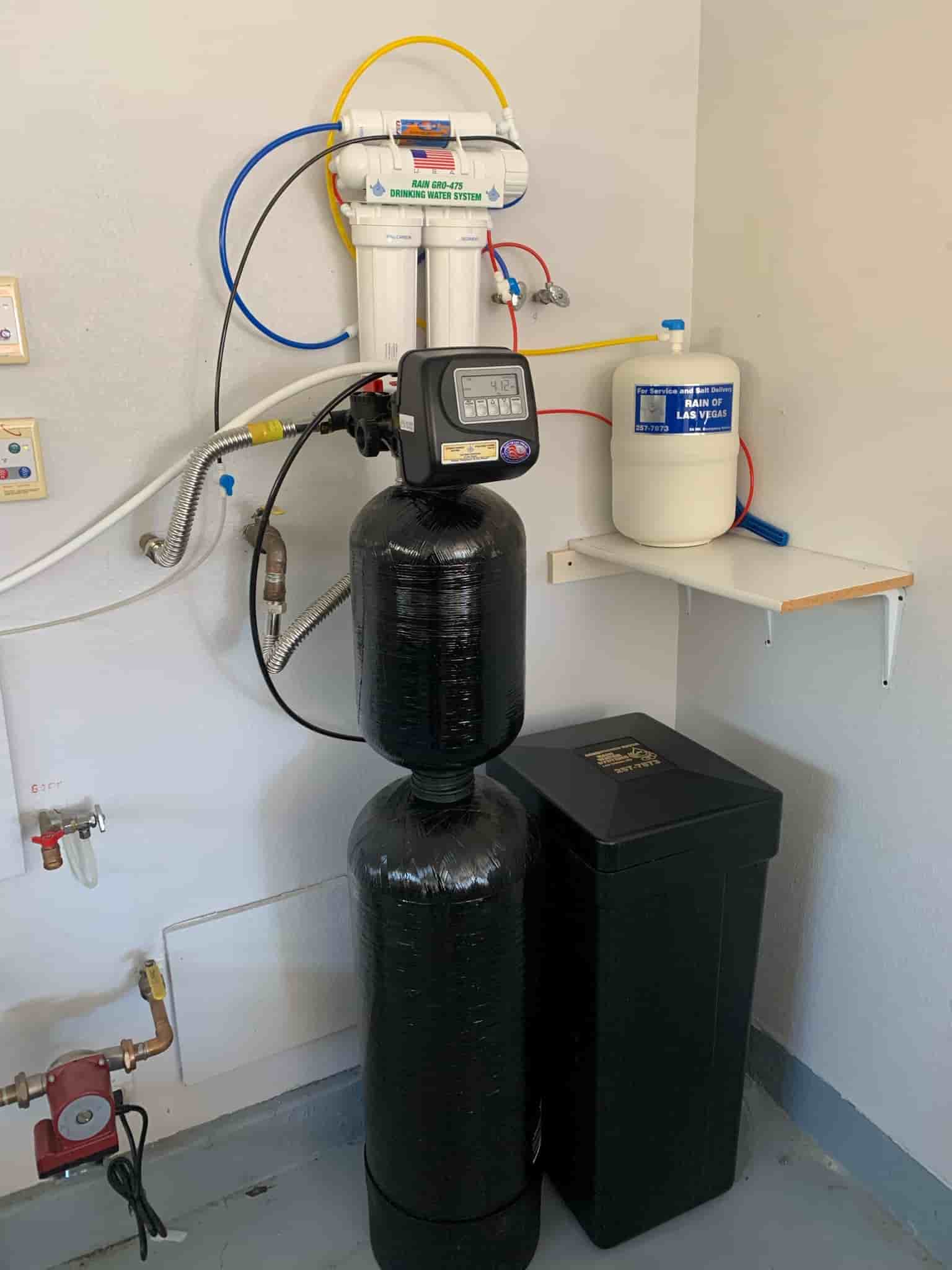
Whole-home soft water systems treat water before it’s distributed throughout your home or commercial building. The water in the system’s mineral tank flows through round resin beads, and this is where the ion exchange begins.
The resin beads have a negative ion charge, which means they’re anions.
Calcium and magnesium have a positive ion charge, which means they’re cations.
When these opposites meet, the anions attract the cations. They’re like magnets, holding the minerals in place while releasing sodium ions into the water.
A control valve regulates the amount of water flowing into the mineral tank, controlling the rate of ion exchange.
Since the water flowing into your plumbing system no longer contains the minerals that were making it hard, you can enjoy the benefits of soft water.
Soft water systems have a brine tank that’s located next to the mineral tank. The brine tank supplies the beads with salt, thereby restoring their charge and allowing them to continue attracting minerals.
The salt in the brine tank is heavily concentrated, and the solution in that tank is released into the mineral tank by the control valve, which monitors the sodium ion levels of the beads and determines when they need to be replenished.
Benefits of Soft Water
A whole-home soft water system treats water before it’s distributed throughout your home. Since your soft water system prevents hard water from entering your home, it mitigates the harm Las Vegas’s hard water can do in multiple ways.
- Detergents and soaps will lather effectively so you won’t spend more money on laundry detergent and other cleaners.
- Soft water helps prevent dry skin and keeps your hair looking shiny.
- Soft water prevents your fixtures from corroding.
- Soft water systems enhance water quality, providing high-quality water for cleaning, cooking, and drinking.
- Soft water systems prevent hard water from affecting the taste of your water.
- Soft water systems prevent minerals from building up in appliances, such as dishwashers, ice makers, washers, and water heaters, which affects their ability to work efficiently and causes breakdowns.
- Soft water systems protect your plumbing system by preventing mineral buildup in the pipes, which, in turn, prevents low water pressure and blockages.
- Soft water systems save you money on clothes, preserving fabrics and colors.
In addition to all these benefits, soft water systems save you money. You’ll spend less money repairing and replacing appliances and fixtures. You’ll also spend less on soap and detergent. Your fabrics will last longer, so you won’t need to replace clothes and linens as often, and you can prevent damage to your plumbing system, which can be costly to repair.
Choosing the Right Soft Water System in Vegas
There are do-it-yourself strategies for softening water, such as boiling or distilling water, or adding vinegar. However, in addition to leaving your plumbing system, appliances, and fixtures vulnerable, these strategies are time-consuming.
Having an experienced Las Vegas water softener company is the most effective way to ensure the water flowing into your entire building or home is soft. The water-softening experts at Rain Water Conditioning of Las Vegas will provide you with professional water softening solutions.
We’ll review each soft water system’s capacity to ensure you get a system that can effectively serve your home or business. We’ll also explain how to care for your system, and we offer maintenance services, such as salt delivery, to ensure you have what you need for your system to run flawlessly and maximize its lifespan.
Once we install a Rain Water Conditioning of Las Vegas soft water system, you can rely on the system to deliver all the benefits of using soft water.
Get to know the team at Rain Water Conditioning of Las Vegas.
Enjoy the Benefits of Soft Water Today
Soft water systems remove minerals from the water entering your home, thereby improving the water quality. Preventing hard water from entering your plumbing system helps prevent clogged pipes and keeps minerals from damaging appliances, clothes, and fixtures.
Contact Las Vegas water softening experts to discover how a soft water system can improve your water quality. Whether you want to improve the water quality in your home or business, the team at Rain Water Conditioning of Las Vegas can identify the optimal soft water system for your building, helping you prevent damage from hard water.
Call us today to learn how you’ll benefit from a soft water system.
Sources:
Hardness of Water. (2018).
Salemme, S. (2025). America’s hardest water: The 10 US cities with the highest water hardness.
Water quality FAQs: Hard Water. (2025).